Fire is often seen as something to fear, but the right sort of fire can actually become a powerful tool for healing and protecting Country.
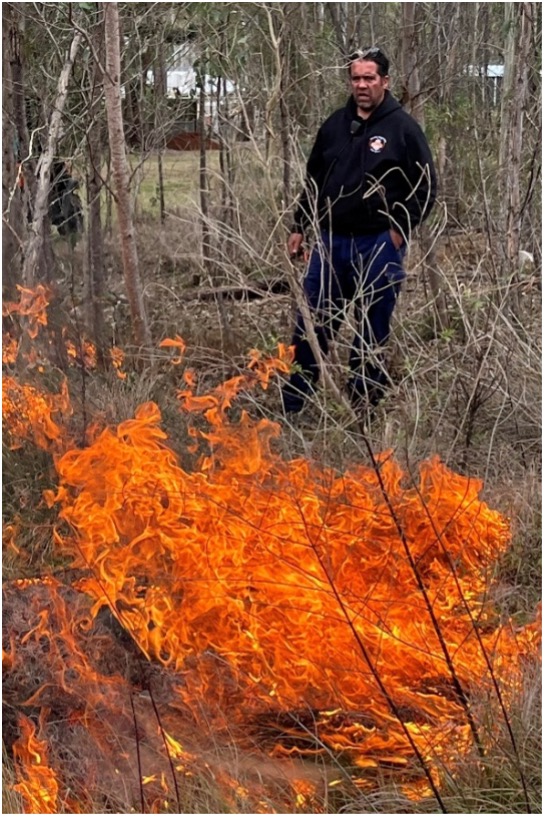
On August 1st, a group of about 50 people gathered in the bushland behind the Amaroo Environmental Education Centre in Kleinton to see this firsthand during a cultural burning demonstration led by Robbie Williams from FIRE LORE.
Robbie learned the practices of cultural burning from Elders in Far North Queensland, where it has been applied continuously across vast landscapes for generations. Based in Casino NSW, the FIRE LORE team brings more than 45 years of combined experience in Indigenous fire management. They are also the first company of their kind to secure public liability and indemnity insurance for cultural burns, expanding the opportunities for integrating these traditional practices into modern land care.
Robbie described sick country as “Upside down country” where the canopy is sparse or dead and thick undergrowth dominates the ground below. “Mindle wabarduma” or clever fire involves low, controlled burns that reduce fuel levels and open up the undergrowth, restoring native grasses and promoting habitat for wildlife.
Conventional hazard reduction burning is applied once a hazard has already built up, but regular cultural burns prevent that hazard from forming in the first place. As Robbie puts it, with climate change making Australia drier and more prone to severe bushfires, we simply can’t afford to keep mismanaging our land with outdated practices.
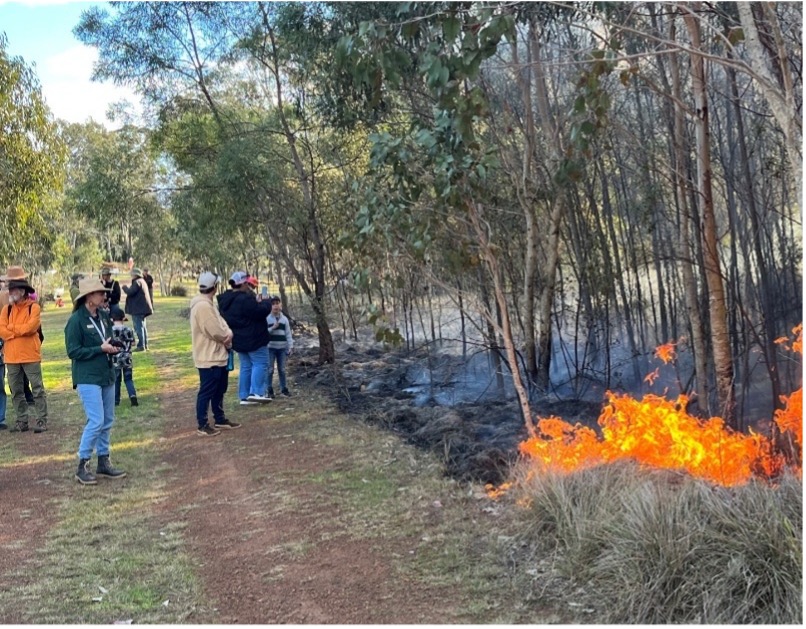
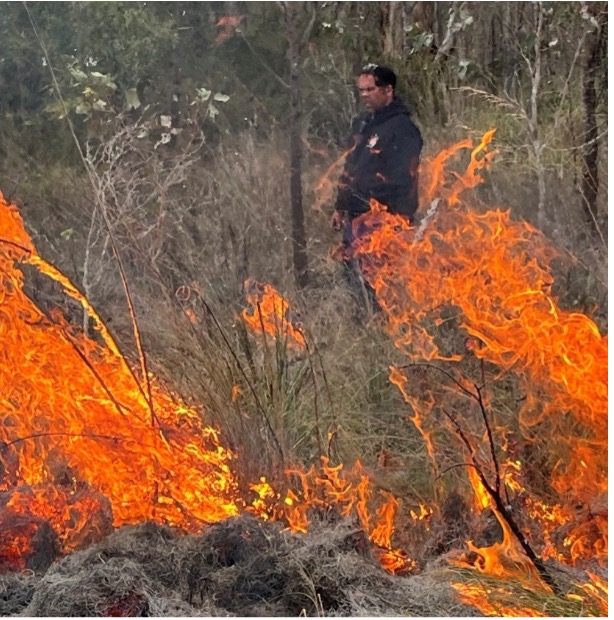
Doing it right takes a deep understanding of the land—reading the specific trees, grasses, and terrain to see how the fire will behave. Timing is determined by weather and the state of the vegetation – particularly grasses. For example, volatile invasive African Lovegrass can only be safely burnt two to three days after rain. The burn starts from an ignition point facing into the wind, using the breeze to slow the fire’s spread. A cool, healthy burn sends up white smoke while a hot, damaging burn produces black smoke.
Cool burns can also help contain invasive weeds such as Lantana so long as the plants are under two meters tall, whereas hot burns can encourage unwanted species like wattles to take over. Restoring severely degraded land is a long-term commitment that can take annual burning for up to 20 years, but as the demonstration at Kleinton showed, bringing clever fire back to the land offers a hopeful, sustainable path toward a healthier landscape for everyone.
Comments