
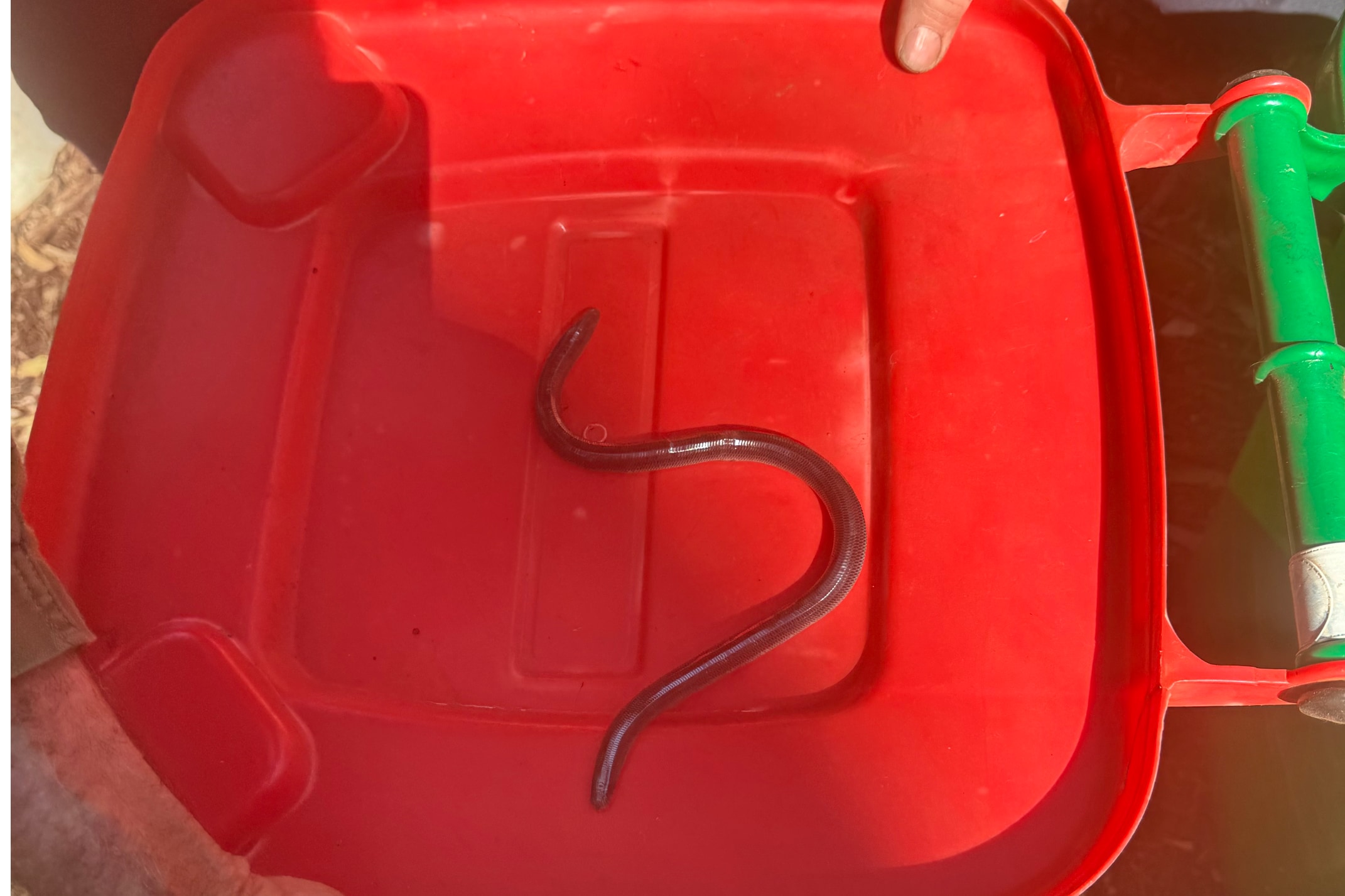
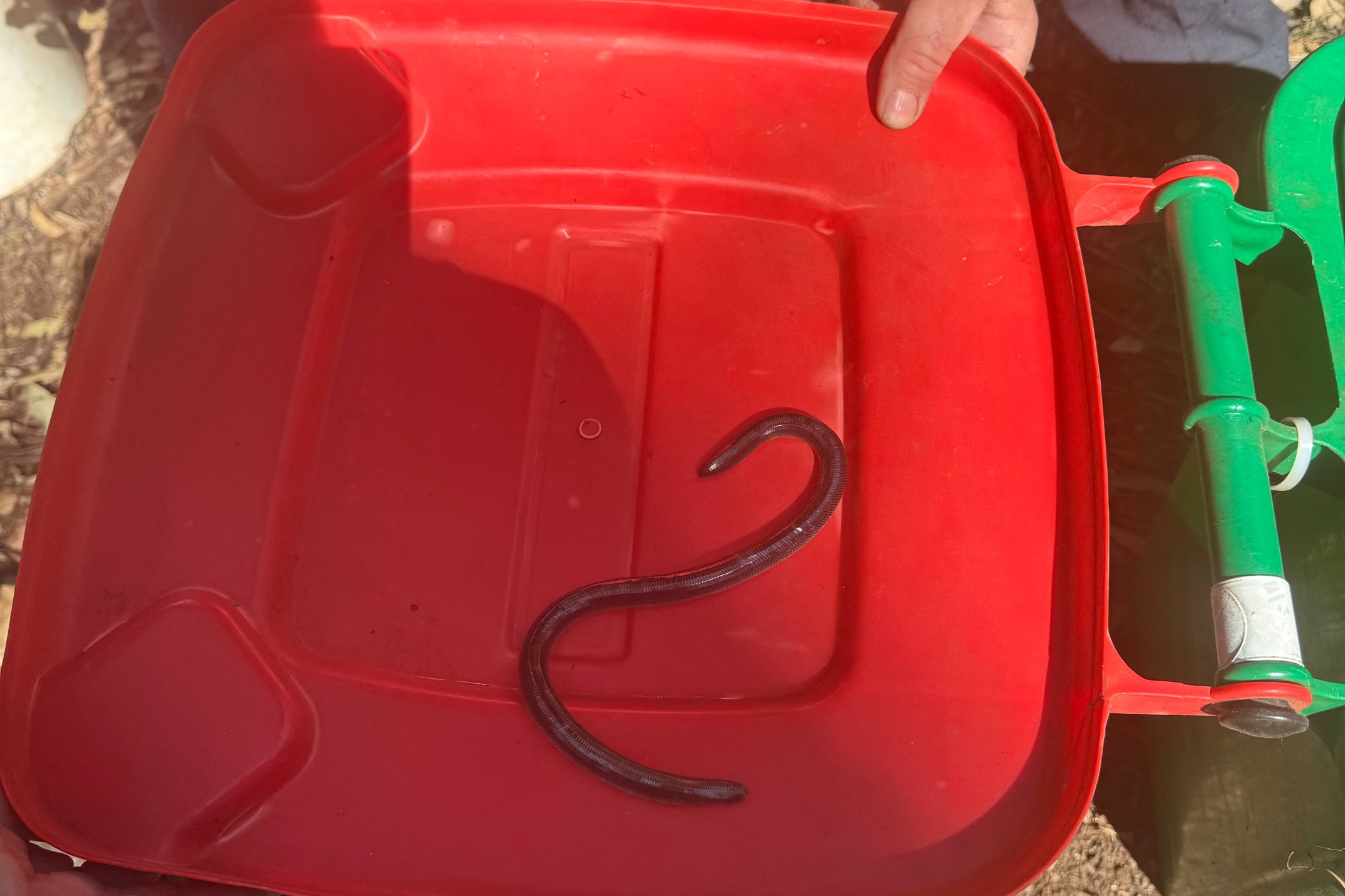
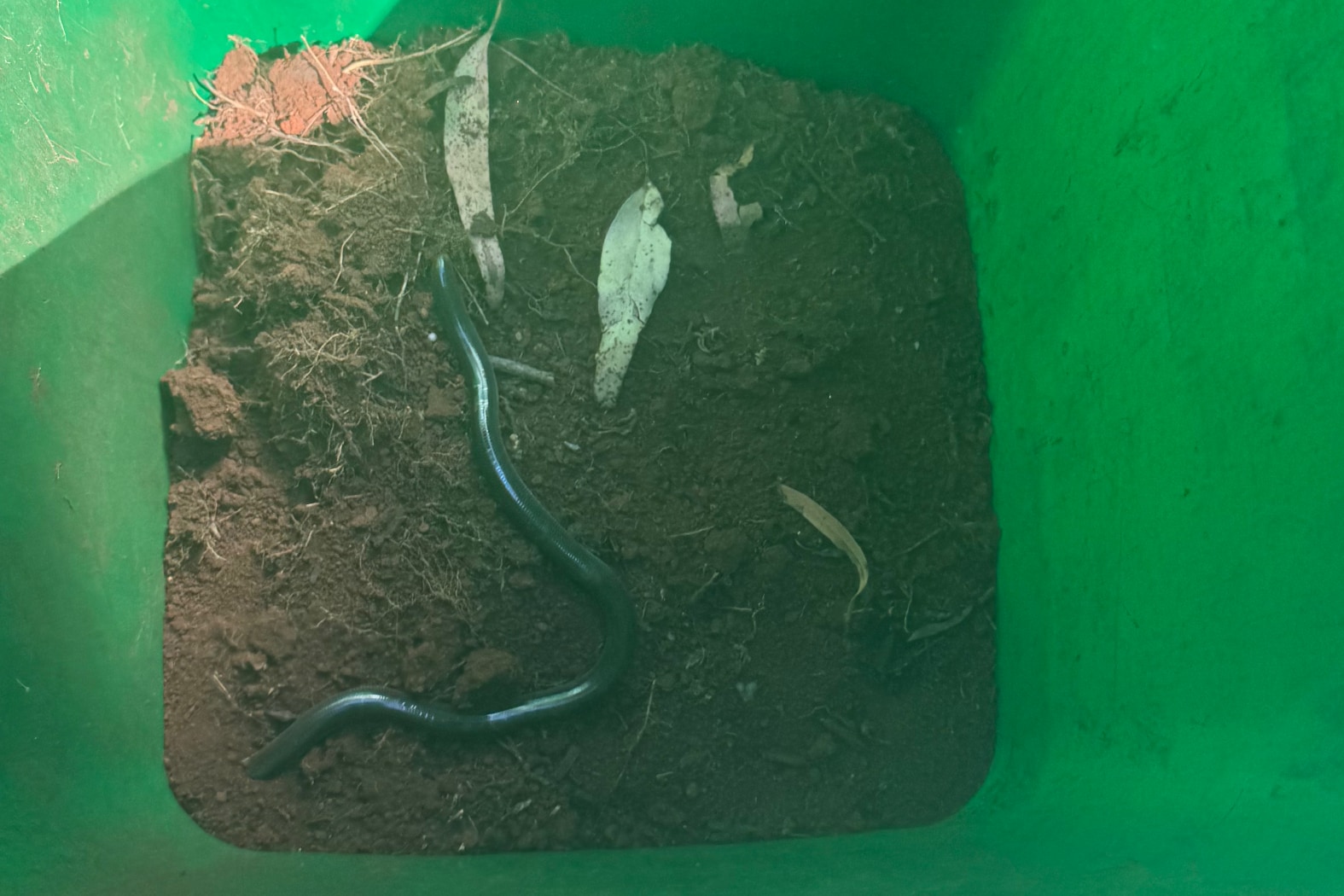
We found a blind snake in Rogers Reserve, Highfields on Friday. It is probably a bit over 300mm long with a little forked tongue. We think that it is called a Blackish Blind Snake Anilios nigrescens. This is the first time that I have seen one of these interesting snakes. They have a dome shaped head and tail. At a glance it is hard to determine which is the head or tail till it starts squirming forward or flicks its forked tongue.
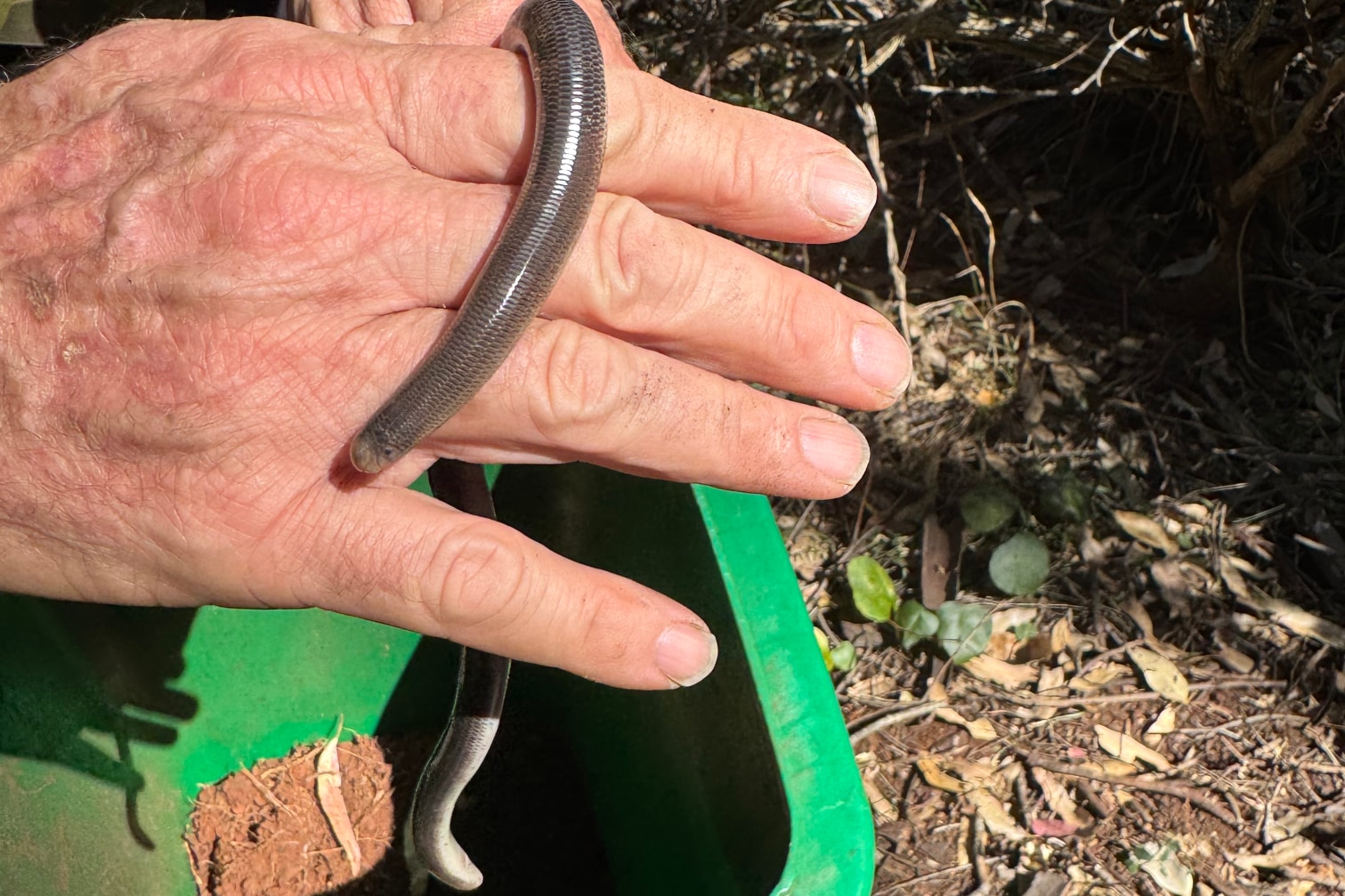
Blind snakes are strictly nocturnal and spend most of their lives hidden underground or beneath leaf litter. Certain Australian blind snakes, like the woodland blind snake (Anilios species), specialise heavily on the brood of bull ants. Occasionally I have found bull ant nests with a large eye shaped opening near the top of the red earth nest which is probably formed by the blind snake living deep inside the nest when it comes out at night after rain.
Rod Hobson has previously recorded five different species of blind snake in the Toowoomba Regional Council area.
Blind snake
Anilios nigrescens
Non-venomous
This is one of our blind snakes of the family Typhlopidae and is harmless. It’s probably a blackish blind snake Anilios nigrescens in Toowoomba and Highfields, they’re very common in South-east QLD.
Blind snakes as the name suggests don’t have external eyes, they do have eyes but they are under the skin/scales which probably only sense light and dark. They spend most of their lives in the soil and eat ants and termites and their larvae. They have small mouths and are quite incapable of biting a person, and are non-venomous anyway.
Blind snakes are small, smooth, worm-like burrower with glossy, close fitting scales They have hard overlapping scales that prevent aggressive bull ants from getting a grip or stinging them effectively. These snakes feed on termites and the eggs, larvae and pupae of ants and are often encountered foraging on the surface at night following rain.
We have an amazingly diverse array of blind snakes in Australia, getting close to 50 species now with more described all the time. Some are amazingly adapted to life underground and one species is only known from a specimen that was brought up from deep underground, stuck to a bore casing.
If you or your students are looking for an interesting activity in a bushland park, FEP volunteers are active at Rogers Reserve, Highfields on the 1st and 4th Friday each month, meeting at the library entrance. Start times can vary but I am usually there on the 1st Friday each month at 9am. For more details about Rogers Reserve or other FEP parks please contact Greg Lukes, 0428 288 077, glukes@bigpond.com
Comments